
By: Quality Addiction Editorial Team
The Last Case You'll Ever Buy: Why a Quiet Cult of Collectors Stopped Trusting the Pouch Their Watch Came In
Published June 15, 2026
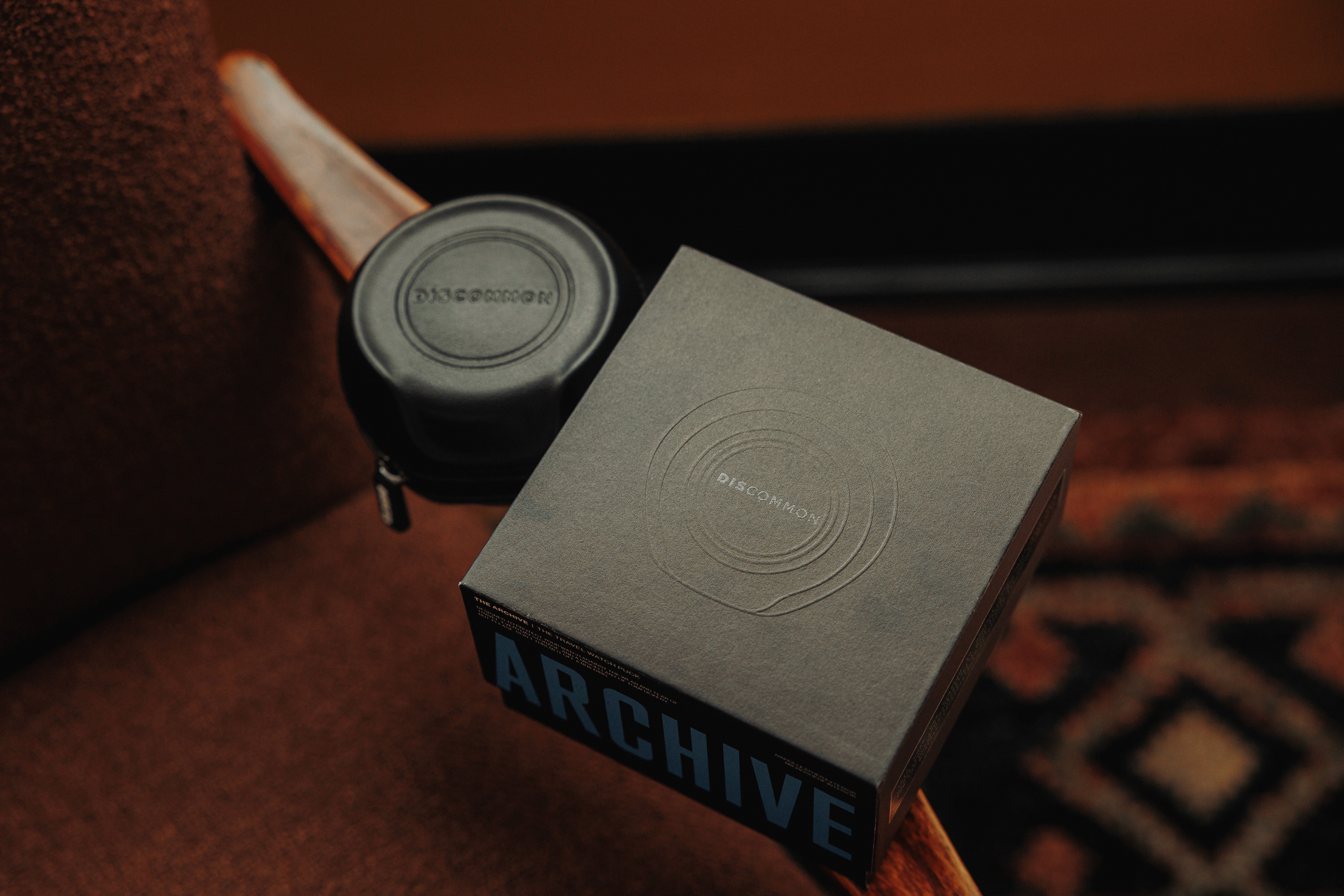
There's a small, slightly embarrassing ritual almost every watch person performs and almost none will admit to.
It happens the night before a trip. The shirts are folded. The charger's in the bag. And then you're standing over the one thing you actually care about — the watch that marked the promotion, or got you through the divorce, or that your father unclasped from his own wrist and handed to you without a word — and you realize you have nowhere to put it.
So you do what you've always done. You roll it in a hotel sock. Or you drop it in the limp zip pouch it came in. Or, feeling responsible, you bury it in the middle of your dopp kit and trust that the cufflinks will behave.
Then you spend the whole flight not quite thinking about it.
The thing nobody says at the airport
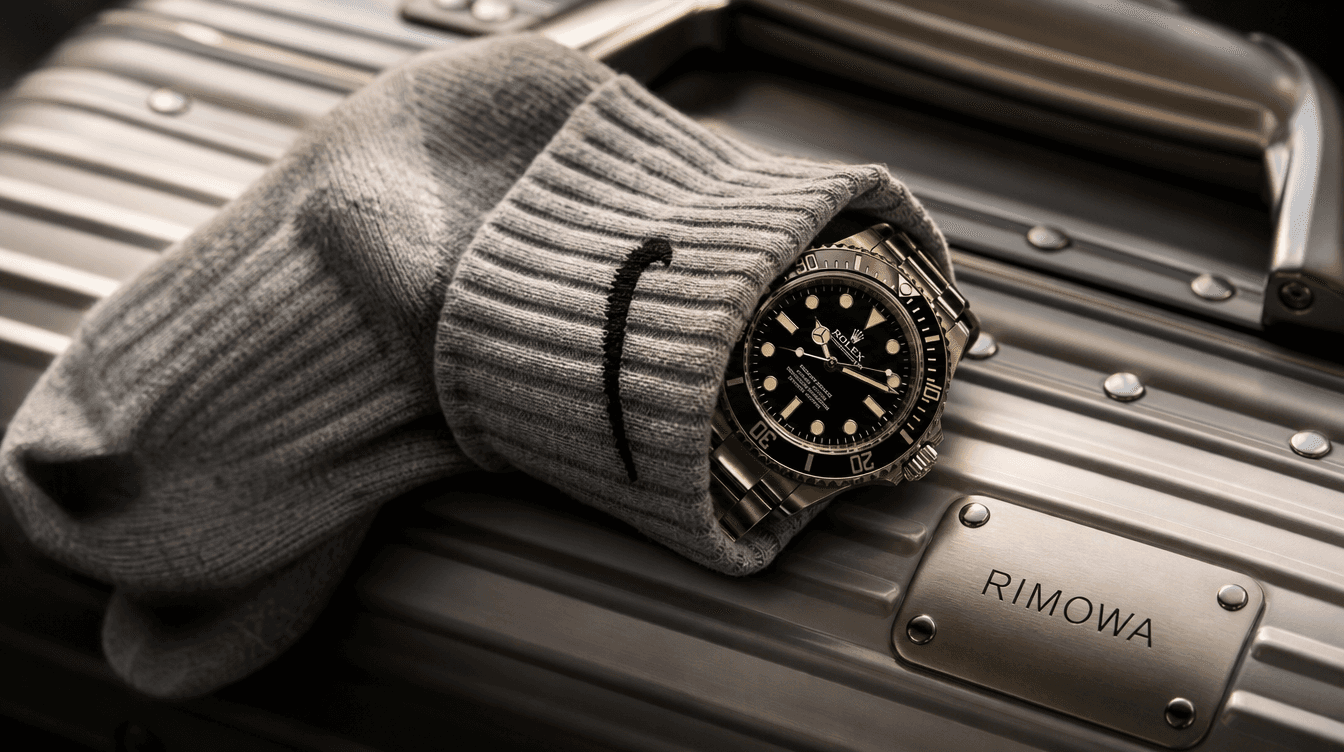
Here's the part collectors don't say out loud: the object you trust least in your luggage is usually the one that matters most. And not always in dollars. Discommon, the company we're about to get to, makes this point with a wink — they'll tell you a $25 Casio calculator watch deserves protecting just as much as the six-figure stuff.
Worth isn't the price tag. It's the meaning.
Which makes the way we protect these things faintly absurd. We'll research a watch for months — movement, provenance, lug-to-lug down to the millimeter — and then send it into the world rattling around in foam that came free in the box.
One collector put it bluntly in a review of the case below: it was, he wrote, "about 100x better looking — and performing — than the travel case I was given from AP." When the protection that ships with a luxury watch is the thing you're relieved to replace, something's backwards.
For years there wasn't much of an answer. The travel rolls were either flimsy, bulky, or built like luggage for a watch that wanted to be an object, not cargo.
Most people gave up and went back to the sock.
Then a company that builds $23,000 coffee tables got obsessed
Discommon isn't a watch-accessory brand. Its sister studio, Discommon Concepts, is the outfit that machines furniture and objects for the supercar world — including a coffee table carved from a four-foot block of aerospace-grade aluminum that GQ clocked at $23,000, built to echo the Aston Martin Valkyrie. These are people who treat a CNC machine the way other people treat a paintbrush.
At some point that obsession turned to a problem most of us had simply accepted: there was no single-watch travel case built with the reverence a good watch deserves. So they built one. And then they kept building it. For seven years.
"It took us seven years to get this right," the company says. "Most people would be embarrassed by that timeline. We're not."

Seven years for something you'd have tossed in a sock
Here's where it stops being a watch case and starts being an argument.
The shell is wet-formed Napa leather — the same leather you'd find in a proper interior, skived deliberately thin so it can be molded into the kind of compound, sculptural curves you usually only see pressed into car body panels.
Most leather goods are cut flat and stitched into shape. This one is formed, which is why it reads as a single sculpted object rather than a stitched pouch.
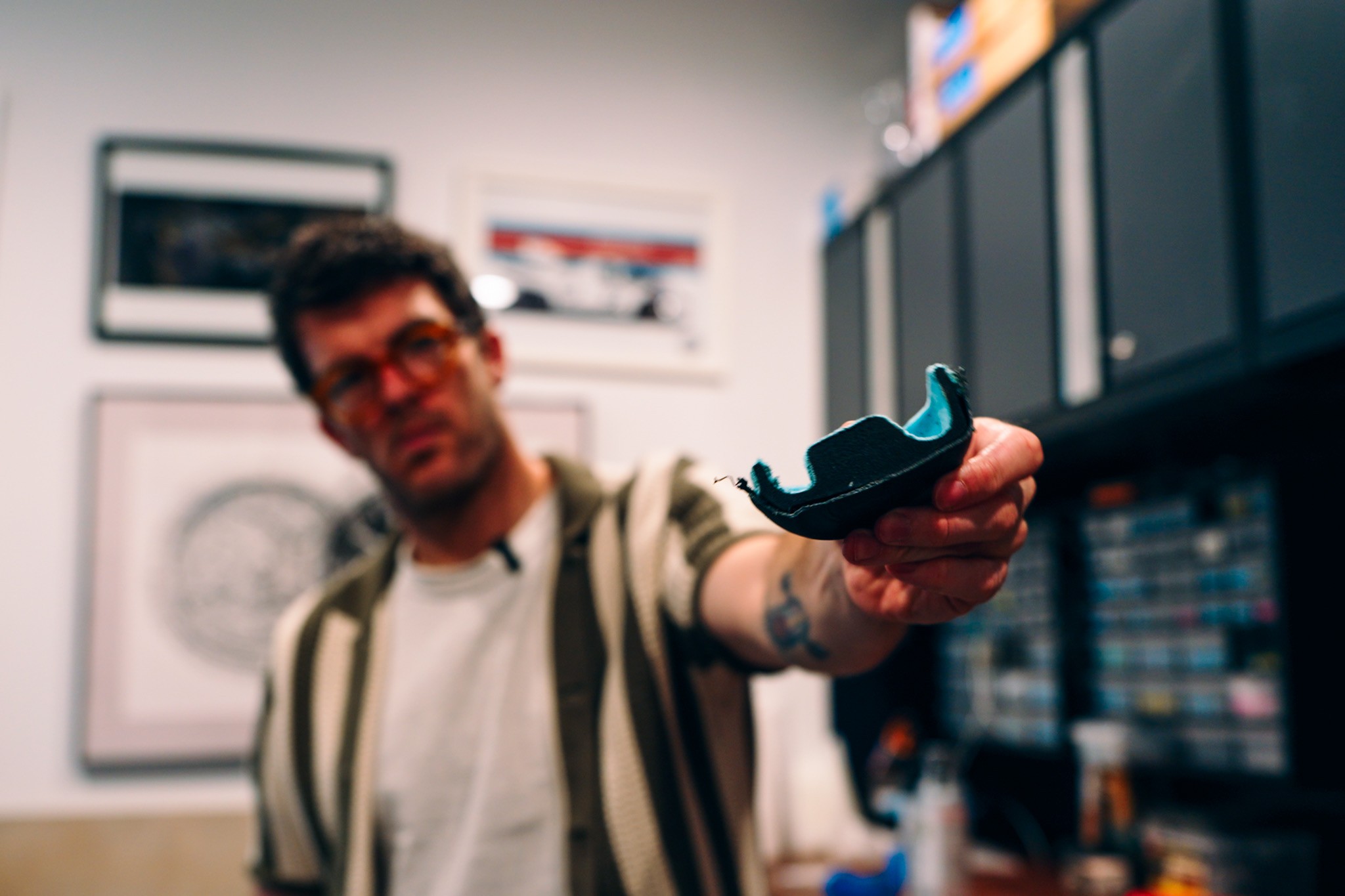
Inside, the watch sits in compression-molded foam — and not the inert grey stuff in your camera bag. It's a shear-thickening foam: soft and yielding while it's just cradling your watch, but it stiffens the instant something hits it, soaking up the energy before it reaches the dial.
It's the same family of physics behind modern impact protection. Stay soft until the moment of the drop, then go hard exactly when it counts.
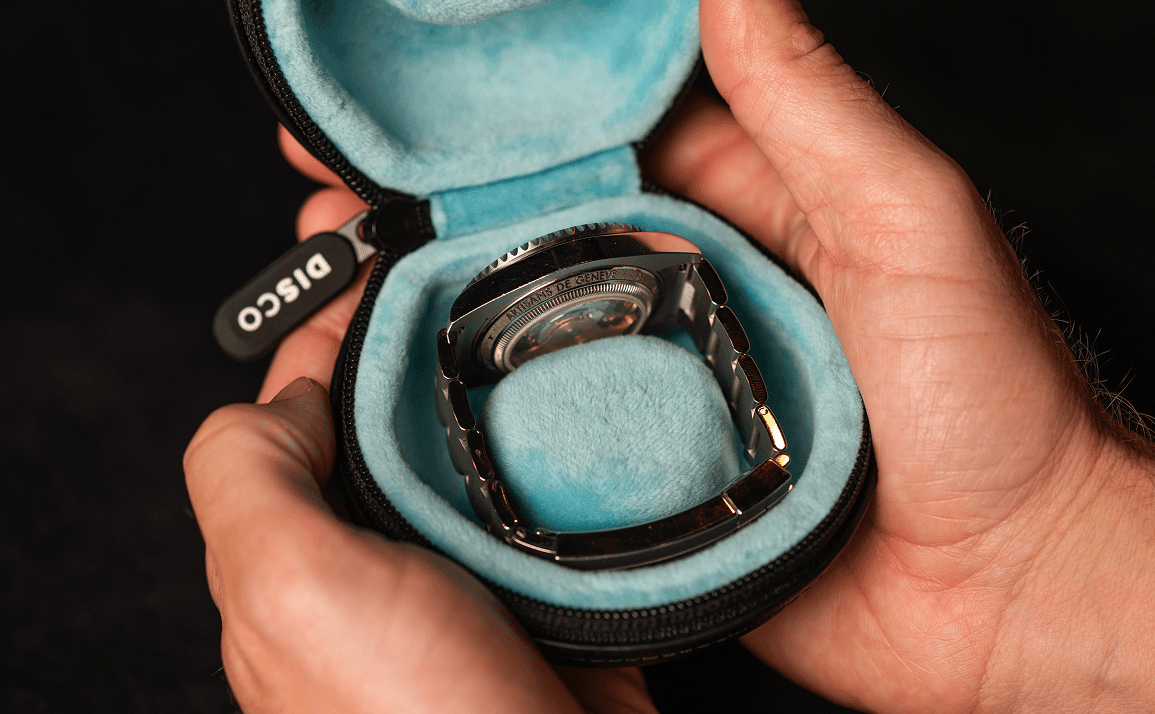
The corners are kept rigid on purpose, so the whole thing won't fold in on itself if it slips off a nightstand. The lining is microfiber — one owner swore his watch said it was "like getting a hug from a baby koala."
And the closure is a YKK zipper that, in the brand's words, "closes like a vault." Robb Report, reviewing the construction, simply called it shock-proof and said it "sets it apart from the rest."
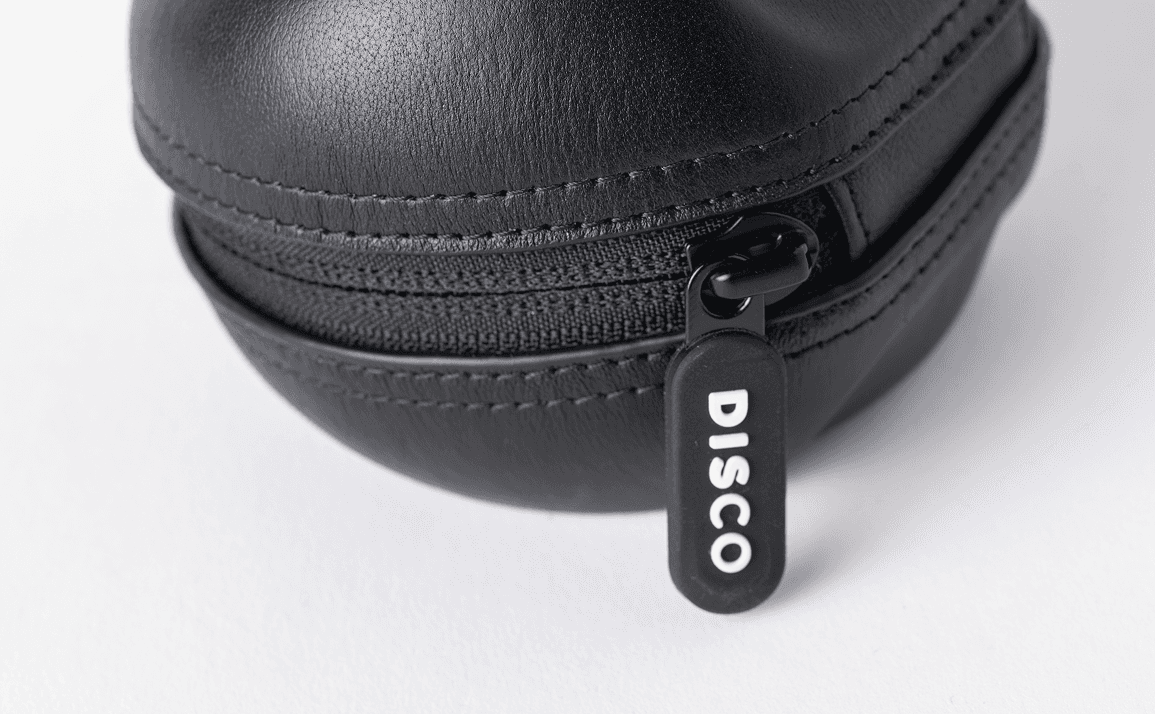
It's called the Puck, and despite the name implying one specific size, the fit is deliberately generous — owners have dropped in everything from a slim dress watch to the architecturally enormous: Richard Mille, Greubel Forsey, MB&F.
If you own something that shouldn't fit anywhere, that's rather the point.











Why it changes the night before the trip
Picture the same moment from the top of this article…
It's the night before the flight. You open a drawer, and there's the Puck. The watch goes in — settling into the microfiber the way a lens settles into its case — and the zipper closes with that single, solid sound. You set it in your bag. And then, for the first time, you don't think about it again until you're unpacking on the other end, lifting it out unmarked.
That's the quiet luxury here. Not that it's beautiful, though it is — one owner called it "sensual horology," another just said it looked "positively sexy doing it."
It's that it ends the low background hum of worry that's followed your best watch through every airport you've ever passed through. And because it's built like an object rather than a consumable, it becomes part of the watch's story too — the thing that carried it, trip after trip, year after year, eventually handed down alongside it.
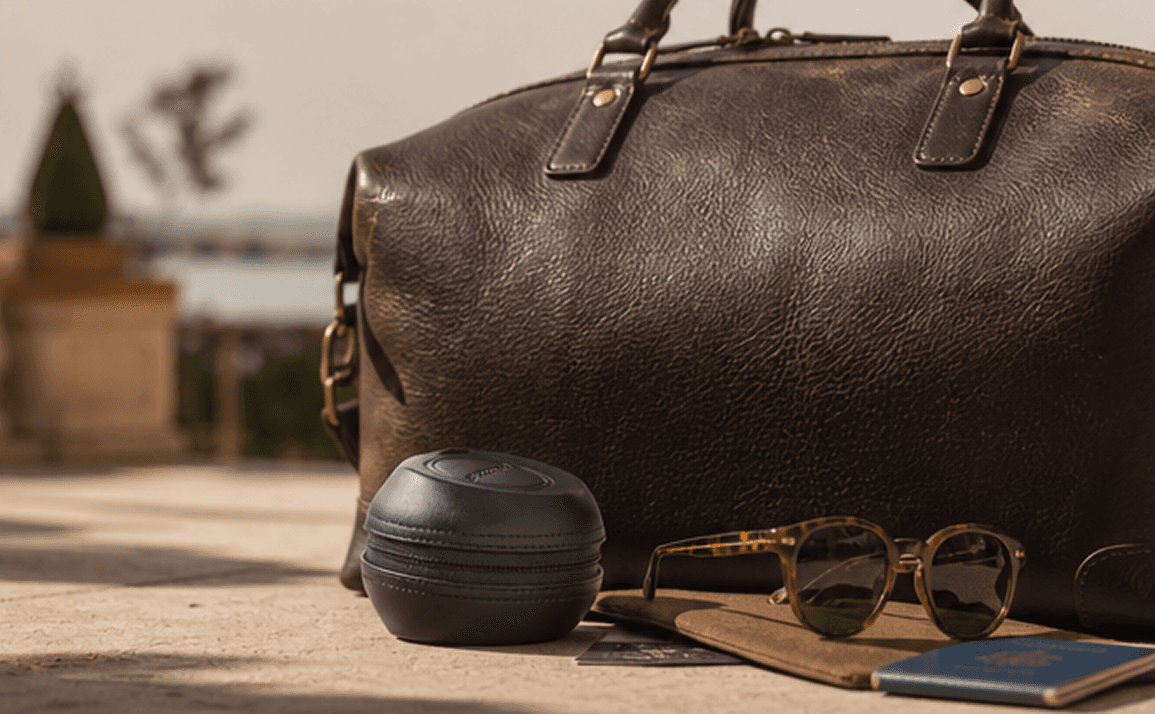
We'll be straight with you…
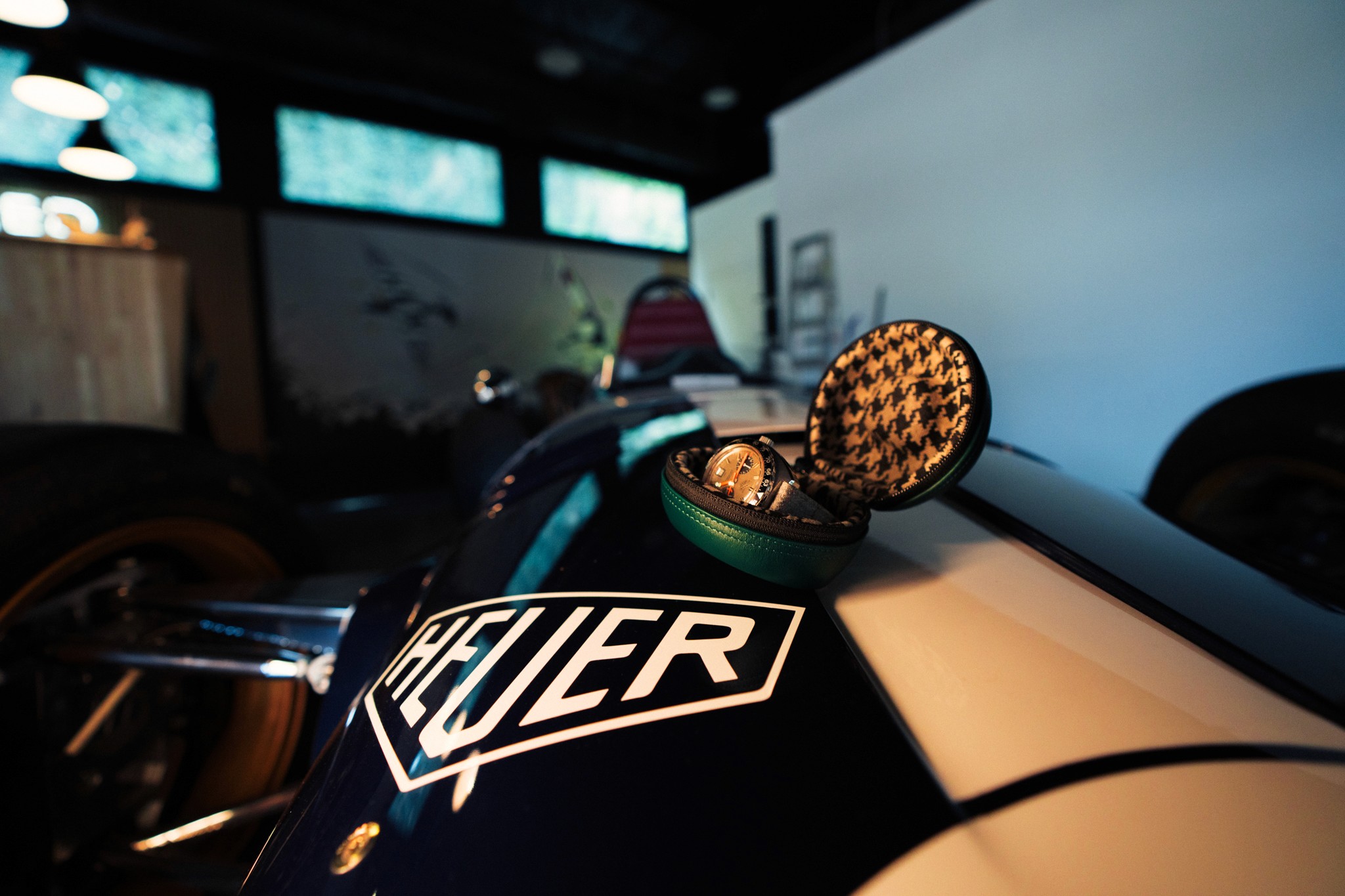
The Puck is $115. Set that next to what's riding inside it and the math isn't close — it's the least expensive serious decision a collector can make. And if you own more than one watch worth protecting, the three-pack is $270, which works out to $90 a case. It comes in Black and Oslo, or a Racing Green and Pepita colorway built to look like it belongs trackside.
One thing worth knowing: Discommon runs things in limited batches. Their "Future Icons" page is essentially a graveyard of sold-out objects — straight razors, helmets, opener after opener — that now change hands secondhand for more than they cost new. Colorways come and go. The case you can buy today is not guaranteed to be the case you can buy in six months.
So if you've read this far, you already know which watch you'd put in it. Stop sending it through the world in a sock.


